
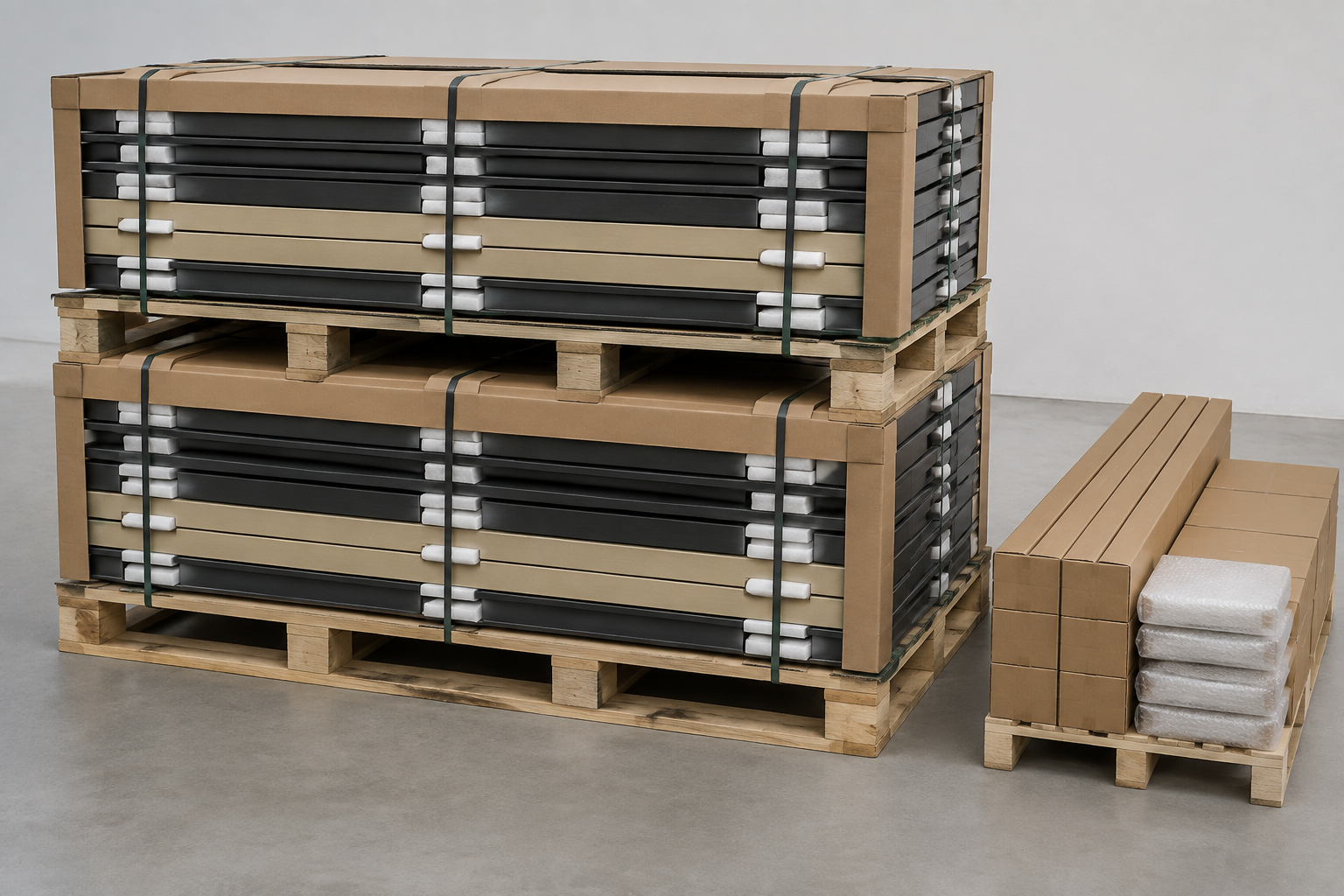
مطابقة الحزم لنطاق المشروع المعتمد
يبدأ تجهيز التعبئة من المخطط المعتمد وقائمة المكونات. ويجب أن يمكن تمييز الأبواب والألواح والأعمدة الفاصلة ومجموعات الملحقات المعدنية بالرجوع إلى مرجع المشروع، من دون اضطرار فريق الاستلام إلى التخمين من المظهر.
اتفق على ملصقات توضح المشروع أو الطابق أو الغرفة أو الكابينة عندما يشمل الطلب عدة مناطق. ويعتمد مستوى التفصيل المناسب على تسلسل التركيب، ويجب إدراجه ضمن متطلبات الطلب.
تأكد من طريقة التعبئة قبل الإرسال
اطلب من المورد توضيح كيفية فصل الأسطح النهائية والحواف والملحقات المعدنية وحمايتها. وأكد متطلبات المنصات أو الصناديق وقيود الرفع ومدى ملاءمة الطرود لمسار الشحن المخطط. ويجب التحقق من معلومات التعبئة مقابل مستندات الطلب الفعلية وسجلات الإرسال.
متطلبات الوجهة الخاصة أو المناولة أو التبخير خاصة بالشحنة. قم بتأكيدها مع وكيل الشحن ومحترفي الاستيراد المعنيين قبل الانتهاء من التعبئة.
استخدم قائمة تعبئة واضحة
يجب أن تربط قائمة التعبئة معرفات الحزمة بأوصاف المكونات وكمياتها. تحتاج صناديق الملحقات المعدنية والملحقات الصغيرة إلى اهتمام خاص لأنه قد يكون من الصعب التوفيق بينها بعد توزيع الطرود حول الموقع.
ينبغي أن تستخدم المستندات التجارية ومستندات الشحن والملصقات المادية مراجع مشروع متسقة. ويجب معالجة أي اختلاف قبل الإفراج عن الشحنة.
- رقم الطرد ومرجع المشروع
- وصف المكونات وكمياتها
- تعريف مجموعة الملحقات المعدنية أو الإكسسوارات
- الوزن الإجمالي والصافي عند الحاجة
- أبعاد الطرد عند الحاجة
قم بتخطيط فحص الاستلام
ينبغي لفريق الاستلام فحص عدد الطرود وحالتها الظاهرة قبل فتحها. سجّل ملاحظات التسليم وصوّر أي تلف واحتفظ بالملصقات ومواد التعبئة إلى أن تتم مطابقة المحتويات. واتبع إجراءات إخطار الناقل عند اكتشاف تلف.
بعد الفتح، قارن المكونات والملحقات المعدنية المسلّمة بقائمة التعبئة والقائمة المعتمدة. وميّز بين أضرار النقل وفروق الكميات وأضرار المناولة في الموقع كي تُعالج كل مشكلة بصورة صحيحة.
اربط الاستلام بخطة التركيب
خزّن الألواح بصورة مسطحة أو وفق توجيهات مستندات المشروع، وفي منطقة محمية تناسب المادة والتشطيب. ونظّم الطرود بحسب تسلسل التركيب واحفظ الملحقات المعدنية الصغيرة بصورة منظمة.
قبل التثبيت، تحقق من أبعاد الموقع والواجهات مرة أخرى. تدعم رسومات التغليف والمصنع تنسيق التسليم، ولكن لا يزال يتعين على القائمين بالتركيب التأكد من أن حالة البناء تتوافق مع المعلومات المعتمدة.
الأسئلة المتداولة
ما الذي يجب أن تتضمنه قائمة تعبئة قواطع دورات المياه؟
يجب أن يحدد الحزم وأوصاف المكونات والكميات والملحقات المعدنية أو الملحقات ومرجع المشروع المتفق عليه، بالإضافة إلى الأوزان والأبعاد عند الحاجة للشحن.
هل يجب أن أتخلص من العبوة بعد التسليم؟
احتفظ بالملصقات والعبوات الواقية حتى اكتمال الفحص الوارد وتسوية المكونات، خاصة إذا تم العثور على تلف أو نقص واضح.
من يؤكد متطلبات الاستيراد والشحن؟
يجب على المشتري تأكيد متطلبات الوجهة مع وكيل الشحن ووسيط الجمارك والمهنيين المحليين ذوي الصلة؛ يجب أن تتماشى المسؤوليات مع شروط التجارة المتفق عليها.
تابع معقائمة مراجعة المشروع، راجعمجموعة المنتجات، أوأرسل معلومات مشروعكللحصول على عرض سعر من المصنع.